.avif)
The best stable block layout is one that suits your horses, land, daily routine and budget. Think about how many horses you need to house, how you will move around the yard and whether you might expand the block later.
Access, drainage, weather exposure and planning requirements will also affect your decision.
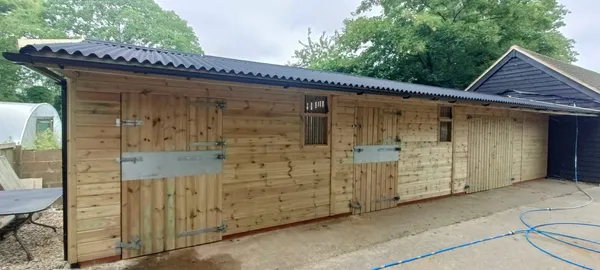
A straight-line block places all the stalls and rooms in a single row. It is one of the simplest stable layouts and often the most economical to build.
This design suits small private yards and long or narrow areas of land. Each stall opens directly outdoors, making it easy for horses to get fresh air and natural light. A front canopy gives horses and handlers extra shelter.
Straight-line blocks are easy to extend if you have enough land at either end. However, a long row can make daily care less efficient if the tack room, feed store or wash bay sit far from some of the horses.
If you need only a few boxes and want a straightforward design, explore the Chart Stables range of wooden stable blocks.
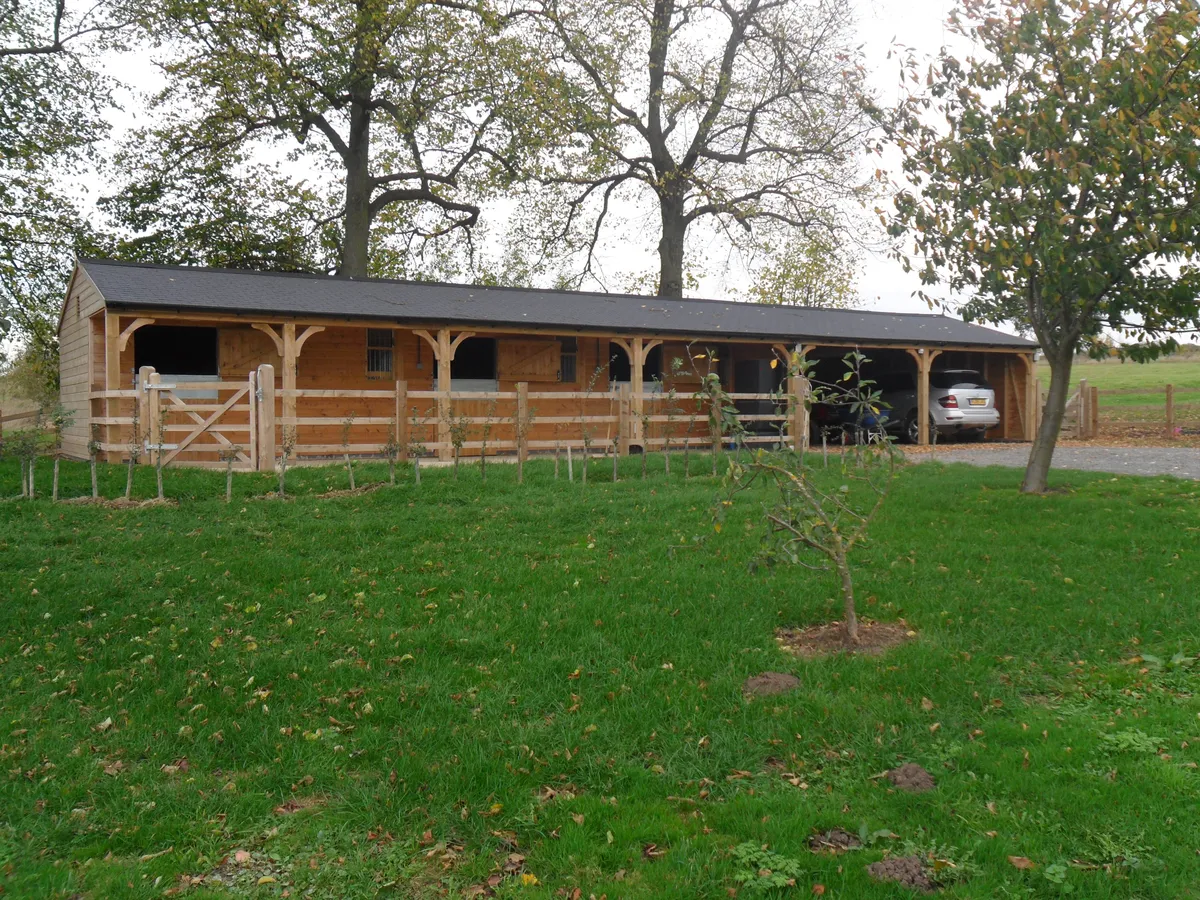
An L-shaped stable block has two rows of stables that meet at a right angle. It works particularly well in the corner of a yard or where you want to make good use of the available space.
The shape gives you a clear view of both sides of the block and makes it easy to move between stalls. It can also provide more protection from wind and rain than a straight-line design, especially when you position the building with the prevailing weather in mind.
You can use the corner unit as a larger stable, tack room, feed store or wash bay. You can also extend either side of the block if you need more stalls or facilities later.
An L-shaped stable block is a practical choice for private and working yards that need flexibility without creating a fully enclosed courtyard.
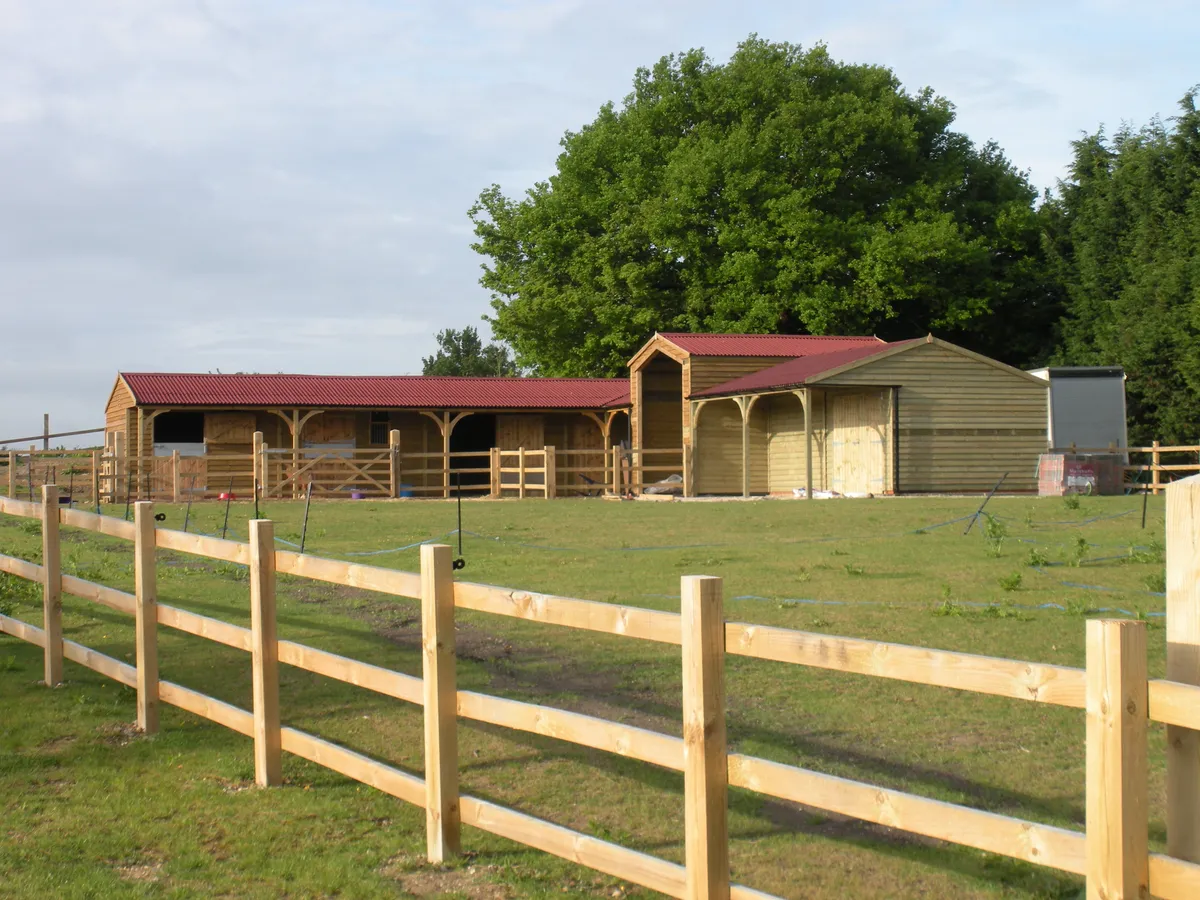
A U-shaped stable block has three connected sides arranged around a central yard. This layout keeps horses and facilities close together, which can make feeding, mucking out and checking horses quicker and easier.
The surrounding buildings provide good shelter from the elements and create a social atmosphere. Horses can see activity around the yard and may have more opportunities to interact with one another. However, you should consider the personalities of your horses when deciding where to place them.
A U-shaped design needs more land and groundwork than a straight or L-shaped block. You will also need enough room in the centre for horses, people, vehicles and equipment to move safely. Good drainage is essential so water does not collect in the courtyard.
You can leave the fourth side open or add gates and an entrance to create a more secure yard.
Check out our U-shaped stable courtyard for an example of this layout.
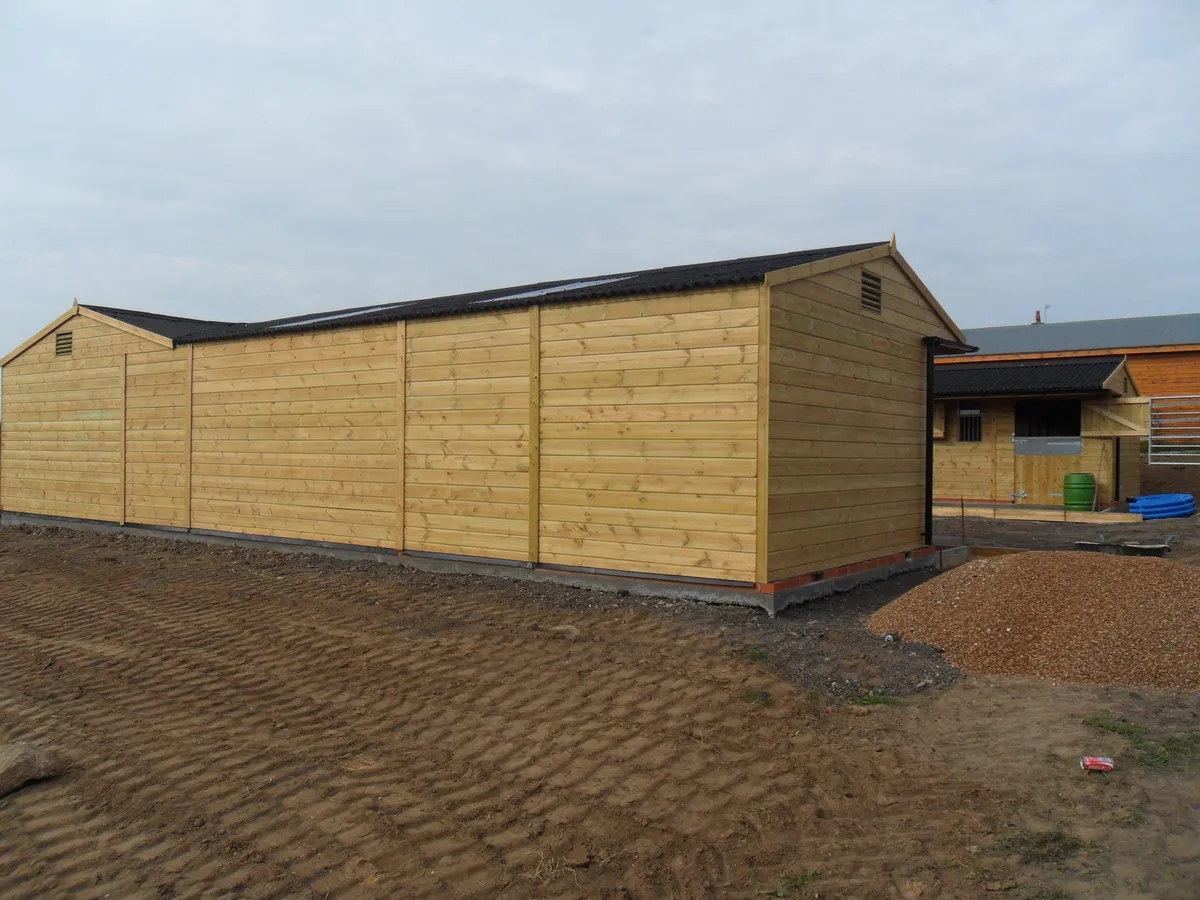
An E-shaped stable block has a long central row with several wings extending from it. It suits large private, commercial or professional yards that need to divide horses and activities into separate areas.
For example, you could use different wings for liveries, competition horses, youngstock or horses that need a quieter environment. The layout can also keep shared facilities, such as tack rooms, feed stores and wash bays, within easy reach.
This design needs a large site and careful planning. You must leave enough space between each wing for safe access, ventilation, vehicles and daily yard work. Drainage also needs to move water away from the buildings and prevent wet or muddy areas.
An E-shaped stable block may be useful when you need a large, organised yard, but it will usually require a bigger budget than a simpler layout.
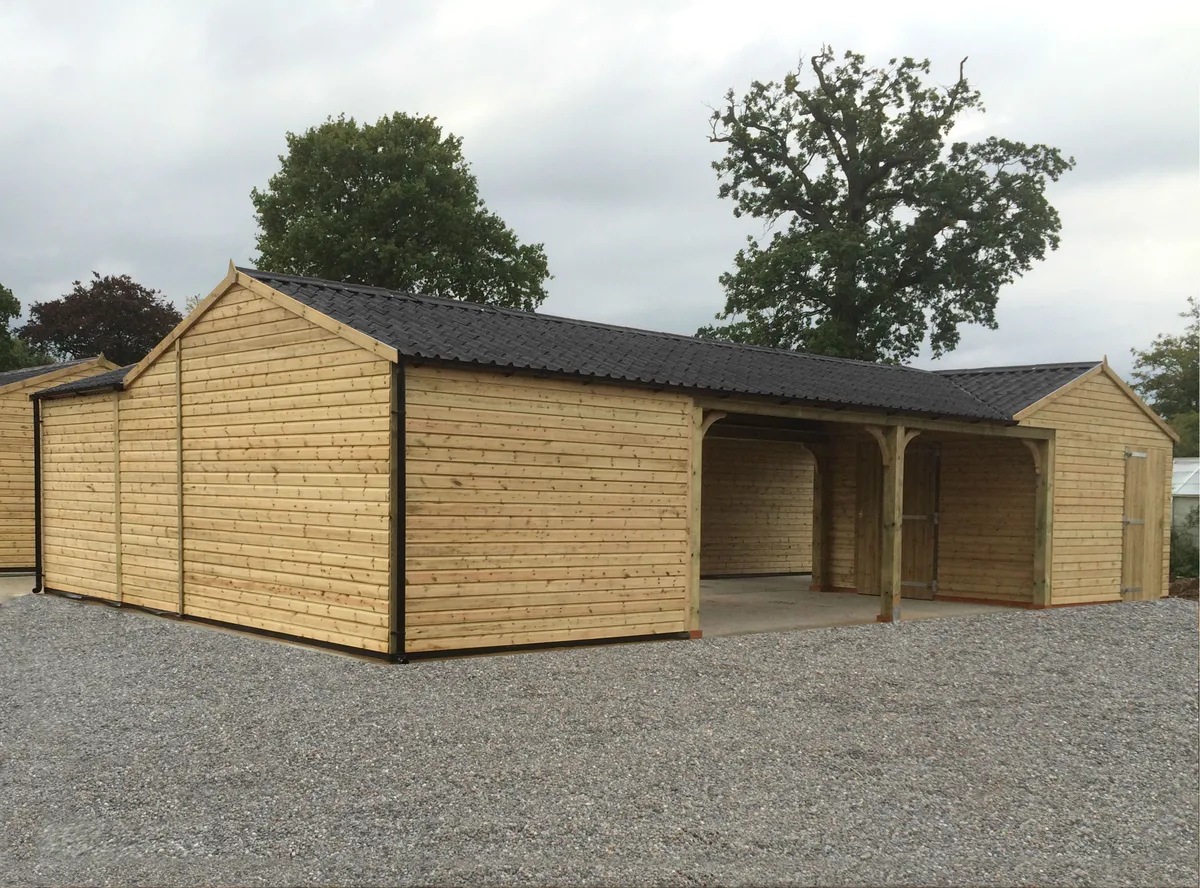
Start with the number, size and temperament of your horses. Most horses suit a standard box, while larger horses, mares with foals, or horses that spend more time inside may need additional space. Read our guide to choosing the right stable size to find out more.
Think about how much social contact each horse enjoys. Some horses settle when they can see their neighbours, while nervous or territorial horses may prefer a quieter position.
Learn more about designing stables where horses can rest and relax.
The size and shape of your site will influence which layouts are possible.
Our guide to choosing the best location for horse stables covers ground conditions, access, orientation and planning.
Consider how you will feed, turn out, groom and check your horses day-to-day.
Keep the routes between stalls, fields and storage areas simple and clear. Place tack rooms, feed stores, wash bays and hay stores where they will make these tasks quicker and easier.
Permanent stable blocks need a suitable base and effective drainage. The design should direct rainwater away from the stalls, entrances and main working areas.
The amount of groundwork will depend on the layout and condition of your land. Read our guide to laying stable foundations to understand what may be involved.
Your needs may change over time. You might add more horses, expand your storage or include a wash bay later.
Straight and L-shaped blocks are often easy to extend from one or both ends. Expanding a U-shaped or E-shaped yard can take more planning, so include any likely additions in the original design.
Permanent stables usually need planning permission, although the requirements depend on the site, building and land use.
Check with your Local Planning Authority before finalising the design or starting groundwork. Our guide to planning permission for stables explains what to check before you build.
At Chart Stables, we design and build straight, L-shaped, U-shaped and bespoke stable blocks. You can choose the number and size of stalls and add facilities such as a tack room, feed store, hay store or wash bay.
Our experienced stable planners will work with you to create a layout that suits your horses, land, routine and budget. Explore our wooden stables or contact our team to discuss your plans.
What is the best stable block layout?
The best layout depends on your horses, land, routine and budget. Straight blocks suit smaller or narrower sites, while L-shaped and U-shaped blocks provide more shelter and keep facilities closer together.
How much space do I need for a four-stable block?
It depends on the size and arrangement of the stalls. Chart Stables’ standard boxes measure 3.6m × 3.6m, but you will also need space for walls, a canopy, access, drainage and any additional rooms. Ask for a base plan based on your chosen layout before preparing the site.
What is an L-shaped stable block?
An L-shaped stable block has two rows that meet at a right angle. It fits well into a corner, offers additional shelter and can be extended if you need more stalls later.
Can I add more stalls to my stable block later?
Yes, many straight and L-shaped stable blocks can be extended. Tell your stable planner about any future plans so they can position the original building and facilities accordingly.